2 Questions:
- Why is it so important to be aware of heart health?
- What can one do to improve heart health?
Answers:
#1. Why is it so important to be aware of heart health? Because heart disease is deadly and costly!
- Heart Disease is the leading cause of death for all people in the United States, contributing to 1 in 3 deaths.
- In 2023, 919,032 people died from cardiovascular disease.
- High Cost: between 2021 and 2022, $168 billion was spent on medications and health care cost addressing heart disease.
#2. What can one do to improve heart health? As usual, the answer to prevent heart disease is simple, but not always easy. It is not easy because the foundation for heart health starts with diet and lifestyle. The following simple suggestions may may reduce the cost and grief that comes with a stroke, heart attack or heart failure.
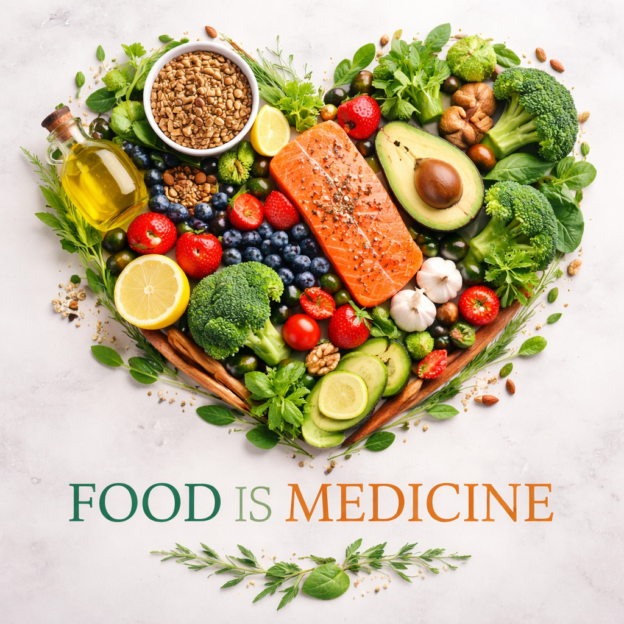
Eat fiber. Fiber is found in whole grains, nuts, seeds, fruits, and vegetables. It is convenient that many of the same foods contain both types of fiber: insoluble and soluble fiber.
Insoluble fiber is non-digestible and provides bulk to stools to improve transit time, and thus reducing constipation. Insoluble fiber increases satiety thus reducing desire for sugary foods and finally resulting in weight loss.

Soluble fiber mixes with water to create a gel-like substance. It binds to toxins and dietary cholesterol, thus preventing absorption into the blood stream. Some soluble fiber is now categorized at pre-biotic fiber because it feeds the beneficial bacteria in our intestines. The by-products of bacterial digestion produce fatty acid molecules that provide anti-inflammatory signals for our cells. Inflammation is reduced in the cardiovascular system and the body as a whole.

A target goal of daily fiber intake should ideally be ~30-35 grams, with at least 10 grams of soluble fiber.
The added benefit of focusing on eating the fruits and vegetables is also obtaining the important nutrients associated with a healthy cardiovascular system: Bioflavonoids and Vitamin C. Bioflavonoids are the beneficial chemical compounds found in plants that reduce inflammation and provide anti-oxidation support. The cardiovascular system benefits from these compounds greatly. Vitamin C, best known as an antioxidant, is also part of our connective tissue matrix, supporting the tissues surrounding our blood vessels.
Exercise is also a key component to cardiovascular health. What is the best form of exercise? Answer: the one that you will do consistently. Ideally, exercise should include both cardio (ie, moving), and weight lifting (moving against gravity). Suggested frequency includes at least 150 minutes moderate or 75 minutes intense activity weekly. Short burst of high intensity activity are also beneficial.
Low impact activities such as yoga, tai chi, and pilates are also helpful for strength, flexibility, and mental wellness.
Breathing. Lastly, a simple technique to reduce blood pressure is to breathe. It sounds so simple. Of course you are breathing, but are you belly breathing? Relaxation breathing techniques such as belly breathing can reduce your stress response and blood pressure in a very short period of time. Find your favorite technique and practice daily.
https://www.cdc.gov/heart-disease/data-research/facts-stats/index.html
Dias MC, Pinto DCGA, Silva AMS. Plant Flavonoids: Chemical Characteristics and Biological Activity. Molecules. 2021;26(17):5377. Published 2021 Sep 4. doi:10.3390/molecules26175377